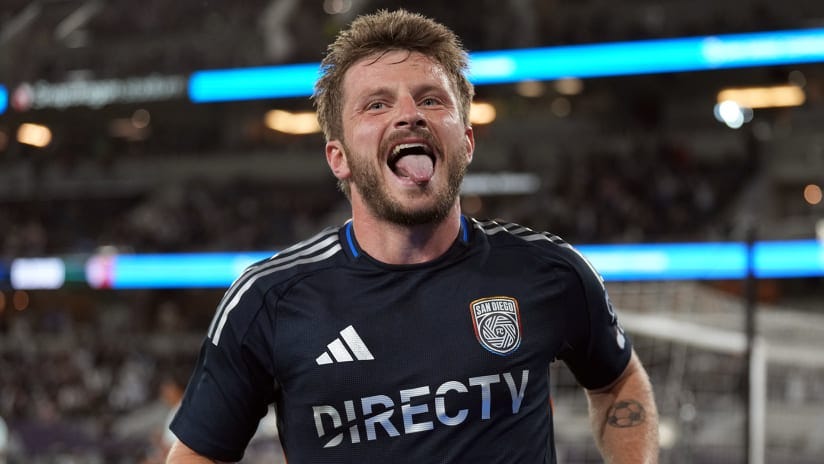
Forget the Padres. SDFC is San Diego's actual team.
It's not just about winning.
The headline of this publication’s best-read piece, “Can we all just admit that MLS is terrible?”, sums up my position on Major League Soccer. The quality of play is poor. The regular season means nothing. Rosters rules make building dynasties and attracting and retaining elite talent near-impossible. It’s all just boring.
And yet: On the pitch, San Diego FC was a revelation, having reached the Western Conference finals in its first year of existence. Off the pitch, the team has been an antidote to all that ails San Diego.
Expansion franchises aren’t supposed to be good. In a preseason power ranking, MLS ranked SDFC third-to-last. They went on to win the Western Conference.
At the Coachella Valley Invitational, the team’s first-ever competition, SDFC looked like an expansion franchise. “They will struggle at times, the losses could pile up in the first season…” I wrote for San Diego Magazine. SDFC went on to amass, by far, the most points ever for a team in its first year.
SDFC’s biggest signing before the season was Hirving “Chucky” Lozano, a star in his native Mexico who came to San Diego with Champions League experience. He was solid, with 22 goal involvements in 31 games, but he’s also been hurt at times and a distraction at others. It didn’t matter.
Anders Dreyer, SDFC’s best player and the league’s MVP if Lionel Messi didn’t exist, has more goal involvements (44) than games played (39). Luca Bombino, the 19-year-old defender loaned midseason from LAFC, will be playing in Europe in the not-too-distant future. A bunch of mid-career veterans just did their jobs. When I interviewed manager Mikey Varas earlier this year, it became obvious why he is a coach, and a good one at that. He’s articulate, passionate, intense. He’s a leader.
Even Tom Penn’s premonition came true. “I’m most excited about what this is going to mean for the community of San Diego,” SDFC co-owner and CEO told me in February. “A sports team, properly executed, unifies a city like nothing else—across all regions, across all ethnicities, across socioeconomic backgrounds, across gender, across political parties.”
Winning is obviously the biggest factor. No one likes associating themselves with losers. Attendance is another way to measure that. SDFC ranked fourth this season in average attendance, behind established teams with larger venues. All of their home playoff games sold out, and the atmosphere made Petco Park look like a country club (but more on the Padres in a bit).
There’s also an exchange that happens (or should happen) between team and fan that’s far greater than mere commerce. We buy overpriced tickets and gear and beer and expect the team to reciprocate with an entertaining product, but we also (rightly) expect them to care. They wear our cities’ names on their chest. They make us believe in something. They inspire kids. Foreclosing on that is a violation of our trust and betrayal of the civic spirit that the team’s profit from. San Diego FC has understood this from the start.
I will admit: I was skeptical. Corporate governance in American sports is centered on monopoly and suppressing competition. SDFC’s branding was (and remains) bland and generic. The marketing was hokey and inorganic—they feature an “18 Threads” thing because there are 18 cities in San Diego County, which is something an out-of-town consultant would focus on from San Diego’s Wikipedia page. And their first home games were marred by homophobic chants.
But they’ve worn me down. SDFC has been a gift to the community.
Before the season, SDFC staged a Chrome Ball tour, hosting events and competitions in each of the area’s cities. They established a Parks & Pitches program, which aims to revitalized community spaces where soccer can be played. The first project, in Colina del Sol Park, rehabilitated sports courts in a low-income, diverse community starving for investment and safe public spaces. Varas visited a school in the same neighborhood. The team also planted trees in Tijuana and sponsored clean-ups in the San Diego River watershed. They quickly snuffed out the homophobic chants.
What’s more remarkable is what they did not do. They did not oppose an increase in downtown parking rates, an increase necessitated by the wealthier areas of San Diego refusing to support tax increases for basic public services. They did not privatize portions of San Diego streets so that they can manage them to their financial benefit. They did not oppose a minimum wage increase that will support the lowest-paid San Diegans in a hellacious cost-of-living crisis.
These are all things the Padres did in the time it took SDFC to launch and play its first season. The Padres owning a legal monopoly and benefiting from a sweetheart lease in a publicly-funded ballpark apparently is not enough for them. Now, the Padres ownership group is selling the team. They will make billions just a few decades after MLB blocked the transfer of the Padres into the public trust.
The Padres, like almost every men’s professional sports team that was once in San Diego, have leached on public resources and raked in fans’ money, then given basically nothing back to the community, except heartbreak. The Padres haven’t won anything, and the owners between Ray Kroc and Peter Seidler did not care. The Chargers moved to and would rather play in a city that ignores them. The Clippers moved away decades ago. The NHL hasn’t even tried.
SDFC’s ownership, on the other hand, spent $500 million for the team, $150 million on a training facility, $22 million on player salaries, and God knows how much on overhead, transfer fees, marketing, etc. before any revenue came in the door, all to stage an entertaining and competitive product. They clearly aren’t skimping on their community outreach efforts. It was all a bet on San Diego caring about an MLS team, but more spiritually, it was a bet on San Diegans caring about an organization that values and reciprocates that compassion. It’s not nothing that, by playing at Snapdragon Stadium and in the footprint of the old stadium, SDFC literally fills the void created by the Chargers.
San Diego FC is not perfect—nothing in MLS is—and the vagaries of the business of sport will quickly put pressure on the team. Dreyer’s going to want a raise from his measly $2.4 million salary. Will MLS’s strict salary cap allow them to keep the team’s first legend? Or will SDFC capitalize on his increased value and sell him for a profit? Wilfried Nancy was just hired away from MLS to lead Celtic, a premier club in Scotland. Will Varas be lured by offers overseas? Members of the front office will surely be poached, considering how excellent the team-building has been.
But that’s all to think about at a later date. San Diego FC was on the precipice of becoming the first expansion franchise to win a major sports championship. They were on the precipice of doing what every other San Diego sports team could not. That’s because, unlike the other wealthy people and corporations in town, SDFC believed in and gave back to San Diegans.


You make a great case for SFDC as a paragon of civic respect. As well as an implicit case for the new owner of the Padres to move them to Brooklyn.