


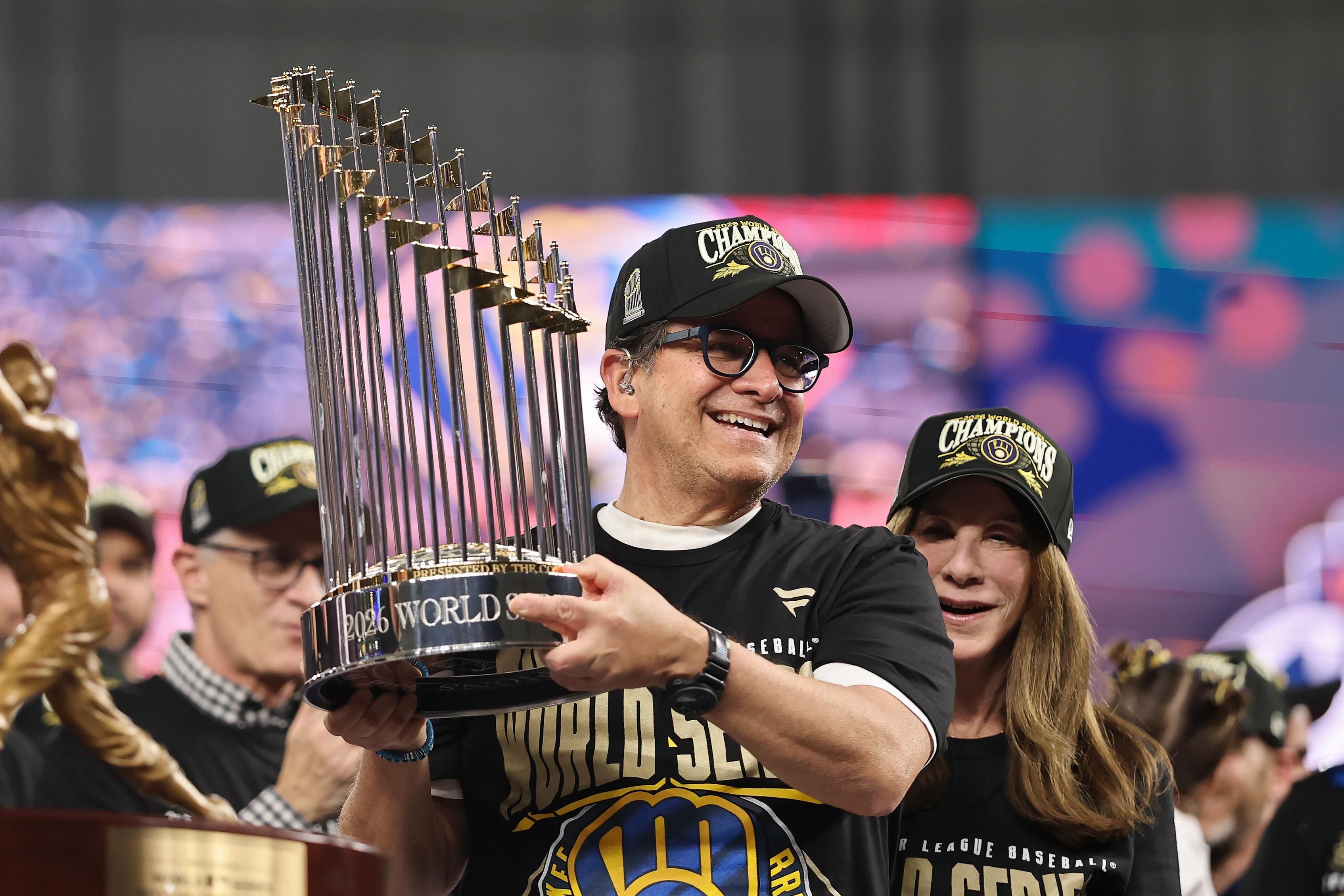
Baseball fans took it as a reprieve, the Milwaukee Brewers winning the World Series. At long last, the big-market Los Angeles Dodgers were felled. At long last, the small-market Brewers won their first championship. And it serves as a useful counter to the league’s anti-labor marketing blitz: There is parity. But this thinking is wrong. It is because of those very Brewers, not the big bad Dodgers, that fans face the specter of no baseball.
The contemporary Brewers are a spiritual descendent of Milwaukee’s many bygone major and minor league teams. Legally, they are the progeny of Bud Selig. A small-time businessman via his father’s car leasing business, Selig was a minority investor in the Milwaukee Braves. When that team moved to Atlanta in 1965, Selig began hunting for a new club, and for a few years he was thwarted by MLB’s antitrust exemption.
He thought he was in position to be awarded an expansion franchise, but instead the National League created the San Diego Padres and the Montreal Expos and the American League birthed the Kansas City Royals and the Seattle Pilots. He then thought he had a deal to buy the Chicago White Sox and move them to Milwaukee, but the American League vetoed the deal. He then thought he had a deal to buy the Pilots, who went bankrupt after just one season, but political pressure from elected officials led MLB to seek Seattle-based investors.
I equate these seemingly unremarkable developments to then-president Barack Obama flaying open Donald Trump at the 2011 White House Correspondents Dinner. It was Trump’s political origin story, the thing that made him break bad. Likewise, Selig saw how businessmen with a rare legal monopoly limited the supply of a popular product to enrich themselves. More than ever, he wanted in on the game, literally and proverbially.
He got his foot in the door when, after unsuccessfully finding new investors, the Pilots were awarded to Selig before the 1970 season by a federal mediator. Selig moved the club to Milwaukee and renamed them the Brewers.
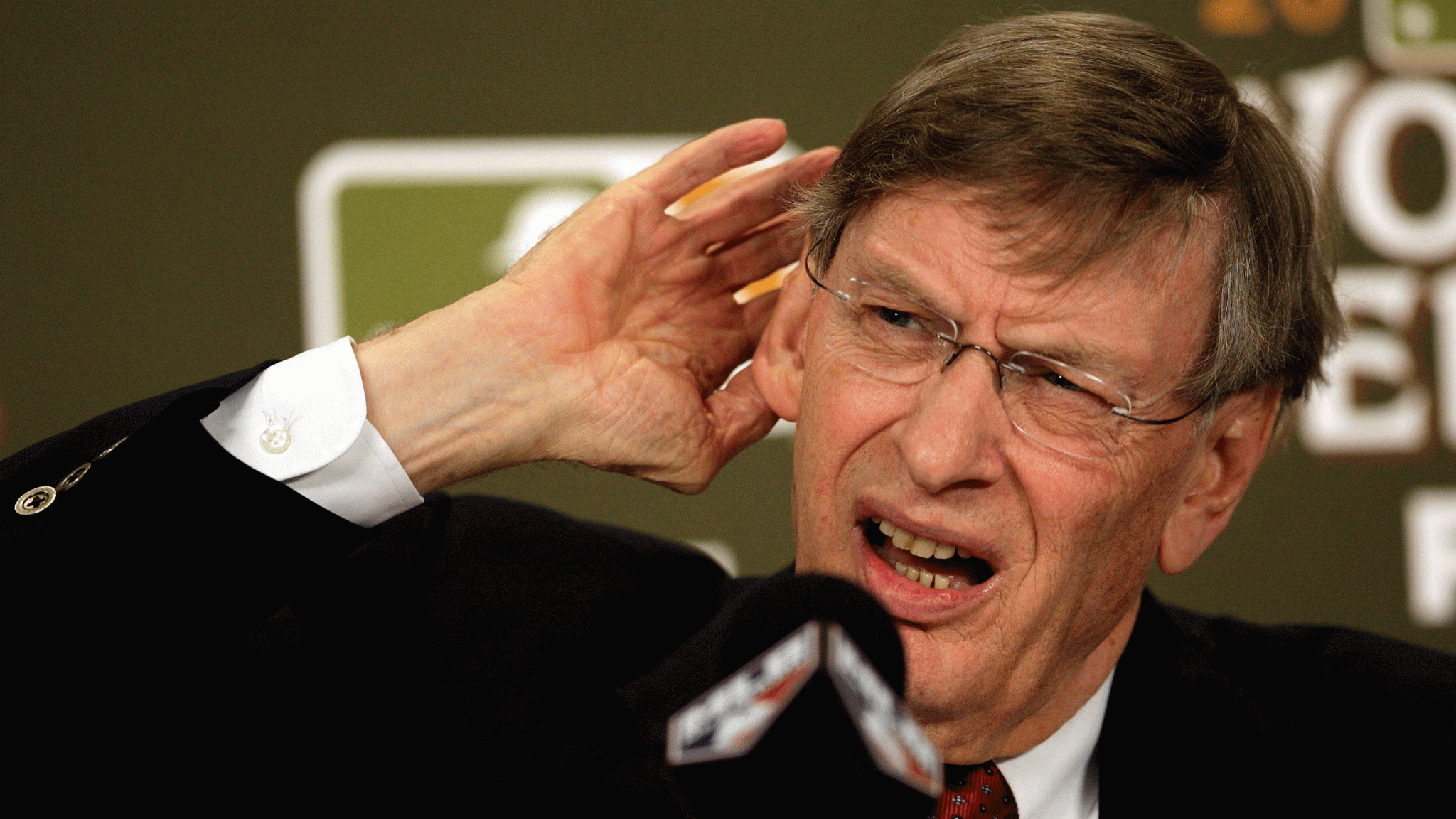
If Selig was the sentimental leader of his investment group—his official MLB biography highlights his boyhood love for a preceding Brewers team—then Ed Fitzgerald was the quiet money man. Significantly, Fitzgerald served throughout the 1970s on MLB’s executive council and chaired the player relations committee (PRC).
In 1981, club owners took a hard stance on a free agency issue pertinent at the time, so the players’ union struck. It didn’t take owners very long to fold, even after collecting strike insurance payments from Lloyd’s of London, and a changing of the guard ensued.
“Ed Fitzgerald, who became a scapegoat for the failed strike, resigned as PRC chairman and got out of baseball altogether,” writes John Heylar in Lords of the Realm, his seminal book on the business of baseball. Bowie Kuhn, presiding over the strike as MLB commissioner, was eventually forced to resign. “The Brewers’ Bud Selig, until now Ed Fitzgerald’s second banana, headed the search for a new commissioner.” So begins Selig’s reign of terror.
Unable to defeat the MLBPA at the bargaining table, baseball owners began colluding in the mid-1980s to not sign players to free agent deals. Put another way, the league via its team owners skirted the collective bargaining agreement that they themselves had agreed to. In the end, owners had to pay hundreds of millions in damages, as well as compensate players who lost out on wages. Selig was a ringleader of this scheme.
By 1990, Selig was the PRC chairman, and in bargaining for a new labor agreement he proposed a salary cap. The union obviously balked, what with player salaries having been limited illegally by collusion, so Selig led a lockout, the most hardline stance by the owners in decades.
Almost immediately, then-commissioner Fay Vincent undermined his bosses by taking a salary cap off the negotiating table. (Vincent had criticized the owners’ collusion scheme, believing it unnecessarily sullied labor relations.) A labor agreement was eventually reached, but Vincent paid for it with his job. Selig led a coalition of owners to force him out in 1992. Selig found Vincent’s replacement in the mirror.
Selig’s six years as acting commissioner might be the most impactful interim gig in sports history—he was the driving force behind the owners’ intransigence during the cataclysmic 1994 strike, and he would later look the other way when Mark McGwire’s artificially enhanced biceps lifted the sport back into the black and back into fans’ hearts.
And who did Selig sell the Brewers to when he became acting commissioner? No one! There are no conflict of interest rules when you are party to a legal monopoly, not even when, at the same time, the club sought and was ultimately given almost $400 million in public dollars to build a new stadium.
Selig, appointed permanently in 1998, would sell the Brewers in 2005 to Mark Attanasio, a standard-issue Private Equity Guy. Attanasio, for his part, lobbied for and received $500 million in public funds to renovate the House that Selig Built, and, while serving on MLB’s executive council, supported Selig’s successor. Rob Manfred had been, for almost two decades, Selig’s consigliere. He lawyered for MLB in labor negotiations as far back as the late ‘80s, and eventually he became Selig’s COO then, in 2015, his successor.
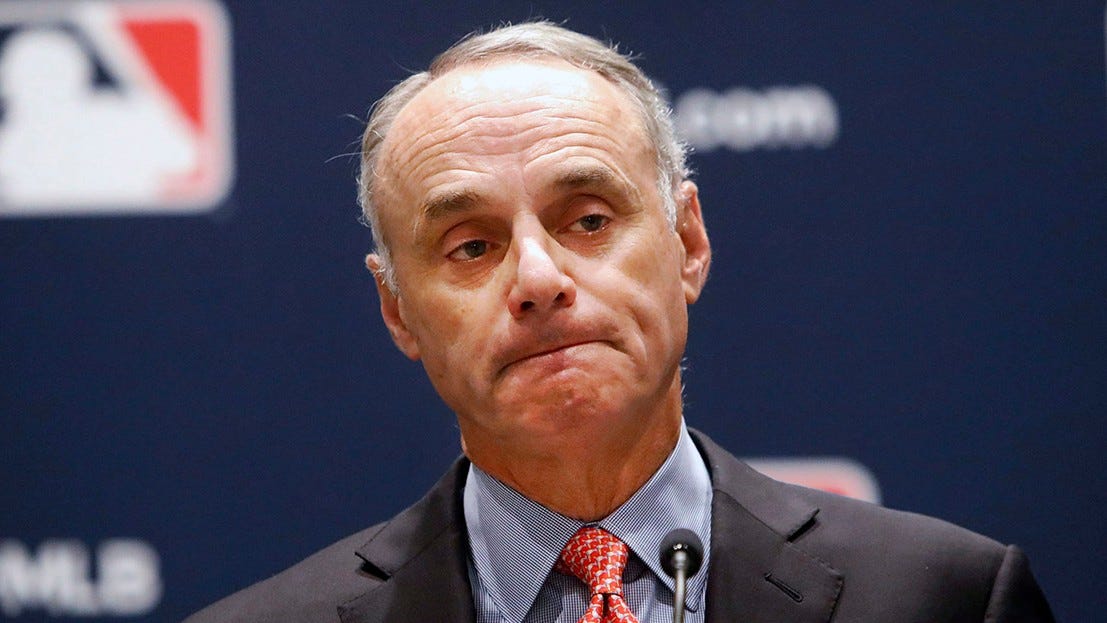
With the training wheels off, Commissioner Manfred led a bruising battle with the MLBPA in 2020 over restarting the league after the onset of Covid. That fed into an acrimonious negotiation for a new CBA in the 2021-22 offseason; harking back to 1990, the owners locked out the players the minute the old CBA expired. The league reopened with barely enough time to complete a full 162-game season.
The owners will do the same this December 1, when the current CBA expires. What does Manfred’s mentor think now? “I try to stay away from this subject, but I will say this to you: We need a cap,” a 92-year-old Selig recently told The Athletic.
The Brewers do play in MLB’s smallest market, and at $147 million their team salary is less than half that of the Dodgers. Of course, the Brewers pantsed the Dodgers in this year’s National League Championship Series and completed one of the most dominant playoff runs ever. Their success this year has exposed the owners’ disingenuous argument that a salary cap is needed to ensure parity, just as the historical record exposes their inconsistency.
Referring to former Cincinnati Reds executive Bob Howsam, who was active in labor negotiations in the ‘70s, Heylar writes in Lords of the Realm that he “thought baseball would collapse if the reserve system were ever modified and free agency allowed.” The reserve system, which permitted teams to keep players on one-year deals in perpetuity, ended in 1975. Baseball did not collapse.
“Even PRC chairman Selig, who woke up each morning moaning about the baseball economy, had lavished $3 million salaries on Robin Yount and Paul Molitor,” Heylar writes, referring to the future commissioner’s complaints in the ‘80s. Today, the baseball economy has never been bigger or more profitable.
“Players’ salaries are too high; clubs are on the verge of collapse,” Hayler reports one owner saying in the ‘90s. Clubs on the verge of collapse, after teams like the Padres are sold for billions, is a laughable assertion.
So what is it? Is a salary cap needed to ensure solvency or to promote parity? Considering Selig’s ideology pervades at MLB, the answer is neither. The only reason for a salary cap is to make the owners richer. It does this in two ways. It limits operational expenses, increasing teams’ year-over-year margins, while it immediately inflates the value of all the franchises.
While big-market owners would obviously welcome more money, they don’t really need it and in fact might be competitively disadvantaged by spending limits. The Dodgers and New York Yankees print money, and New York Mets owner Steve Cohen is the richest in the game. Those teams are able to field competitive rosters and get butts in their ballparks’ seats merely by existing. There are many more teams like the Brewers, small-to-medium market clubs that garner relatively modest revenues while being subject to similar costs.
Heylar documents who owns these teams: mediocre men. Baseball is their way into popularity, into relevance, into real wealth, and into posterity. The lockout isn’t about a salary cap, not really. The lockout is about power, power that mediocre men feel they lost in the 1970s with the advent of free agency.
A young Bud Selig was one of those men. His team’s first World Series victory in its 56-year history is indeed a triumph. It’s a triumph for “capitalists” who are not good enough in and so are afraid of a free market. It is the players who contend directly with this insecurity, but it is baseball fans who suffer most from it.
Great Article.
It took me a few watches and years of being an A's fan to realize the A's where not soe underdog story but a story of an owner that will use everything (including math and stats) to pay his players as little as possible.
It is with no surprise the teams that will only carry pre Arb players and do everything to minimize payroll cost also aggressively want a salary cap so they can continue to pay their players as little as possible.
P.S. The small town mutli millionaire business owners are the worst most Maga people you will ever meet.
Glad this was written. Bud Selig was a scumbag no matter how many statues he erects of himself.