World Cup ticketing might be criminal, but no one's coming to save us
It's all about power
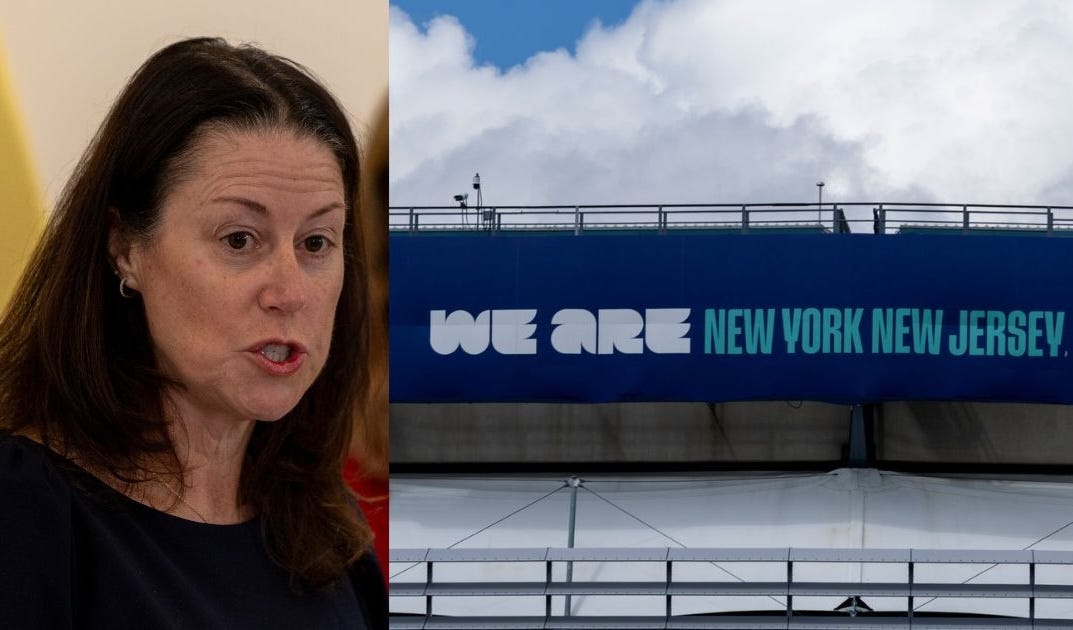
The attorneys general from New York and the great state of New Jersey launched an investigation this week into FIFA’s 2026 World Cup ticketing practices. “Being honest about ticket sales is not complicated,” New Jersey Attorney General Jen Davenport, said in a statement. “But FIFA has turned buying a ticket to the World Cup into a gauntlet of confusion, fake scarcity, and impossibly high prices — all at the expense of consumers and hardworking New Jerseyans.”
That’s exactly what FIFA has done, and its president Gianni Infantino is not shy about it. “We could have [sold all the tickets],” Infantino said at one point in the lead-up to next month’s World Cup, but “we want to keep a few for continuous sale until the start of the tournament to give opportunities to latecomers.” (A few could be as much as 1.2 million tickets.) And at a recent gala, Infantino said the extremely high ticket prices are simply what the American market can bear (even though FIFA is sitting on those 1.2 million unsold tickets, and there are countless already-purchased tickets relisted on secondary markets).
At this point, FIFA’s commitment to its dynamic pricing model seems at once like free marketing and performance art. It’s so shameless and audacious that you have to tip your cap, though the investigation is welcome news. But it will change nothing about this World Cup. It may not change anything at all. That’s because this issue is political, and politics is about power, and politicians in the U.S. are unserious about it.
It’s not clear that the actions Davenport railed against are criminal in the first place. FIFA is committed to business practices that would earn them terrible reviews on Yelp, but dynamic pricing is common in the entertainment industry. Even Bruce Springsteen, who just toured in resistance to the Trump administration, defended dynamic pricing he used in 2022 and remained stubborn in the face of fan disaffection.
It’s true that Ticketmaster/Live Nation are in the midst of a bruising antitrust battle, and a jury recently found that the conglomerate used its monopoly to overcharge customers, but ticketing platforms are separate from event organizers. Lawyers in that antitrust case didn’t prosecute Springsteen.
Economically, dynamic pricing is an efficient mechanism for balancing supply and demand. Perhaps it’s most familiar on our roads. Tolls often increase during rush hours, incentivizing roads users to ditch single-occupancy vehicles when congestion is worse. Of course, outsized revenues during rush hour get reinvested in the publicly owned transportation systems, while event organizers realize private profits. The tool itself is not evil, though.
This is not to absolve FIFA of guilt. It very well may have used illegal business practices, but I think FIFA’s biggest crime is being unpopular. Attorneys general are elected officials, and taking down bogeymen is their political red meat. A lot of Americans with disposable income (i.e. voters) don’t like FIFA right now, and FIFA has cozied up to Trump, who is also unpopular right now. It’s a simple calculation for a Democratic prosecutor.
It was also a simple calculation for lawmakers and administrators to do nothing about ticketing monopolies and the advances in consumer technology and deceptive business practices before the World Cup. Two New Jersey Congressmen sent a nastygram to FIFA a few weeks ago, and in March 68 others implored FIFA to lower World Cup ticket prices. It’s the perfect, risk-free tactic for legislators. They wag their fingers, showing their constituents that they care, while they foreclose on their actual power of making law.
This is how attorneys general got their golden opportunity, but in representing individual states their power is limited. I’m also doubtful whether they’ll continue their investigation after FIFA’s circus pulls up its stakes. It’s the federal government, with its enduring authority to regulate interstate commerce, that would need to protect us consumers from FIFA (or anything other craven multinational business).
There is precedent for this. In 2015, the FBI arrested several FIFA executives and associated soccer officials on charges of racketeering, wire fraud and money laundering conspiracies. It was shocking news at the time, and I’m not sure if it’s because it was the soccer or the corruption the U.S. finally cared about. "If you touch our shores with your corrupt enterprise, whether that is through meetings or through using our world class financial system, you will be held accountable for that corruption," then-FBI director James Comey said.1
The FBI coordinated with law enforcement agencies in other countries, and it will take similar international collaboration to continue taming a beast like FIFA. As the Guardian outlined, FIFA is now $13 billion organization, one that owns the responsibility of organizing the world’s most popular sport. A friend of mine suggested that FIFA wouldn’t notice the money it “loses” if it priced their tickets fairly and transparently and used a lottery, but I’m not so sure. By moving the World Cup to the U.S. and adopting dynamic pricing, FIFA has been able to increase its hospitality and ticket sales from $950 million in 2022 to $3 billion.
That revenue is then sprinkled throughout the world like soccer fairy dust. $12.5 million to every team qualifying in the World Cup. A total prize pool of $871 million. $100 million to U.S. Soccer Federation for hosting the games. $2.7 billion to FIFA’s members and continental confederations. The attorneys general may investigate FIFA and they may ultimately win some restitution, but would U.S. Soccer want its compatriots to kill the goose that lays the golden eggs?
FIFA tentacles are wrapped around all facets of culture, business, and politics. It knows that, and it is intentional. We and our elected representatives call FIFA greedy. We are right. But more importantly, FIFA’s high ticket prices are about maintaining and further entrenching its power. No elected representative is serious about taking that on.
It’s Springsteen, ironically, who suggests a way forward.
On the Land of Hope and Dreams American Tour, the one hastily put together after federal authorities occupied Minneapolis this past winter, Springsteen peppered the show with defiant political speeches. “So many of our elected leaders have failed us, that this American tragedy can only be stopped by the American people,” he said at one point in his routine.
It’d be incorrect and inappropriate to equate high World Cup ticket prices to immigration authorities terrorizing a city for no reason, but I do believe that the many forms of exploitation we’re experiencing today come from a common source: Rich and powerful people, typically men, think they can get away with anything. They are right. They are succeeding.
But nothing in politics is inevitable. If there is hope, then it is found in us. “The last check on power after the checks and balances of government have failed,” Springsteen said, “are the people. You and me.”
In an ironic twist, the Trump administration is going to war with Comey, indicting him on several trumped up charges. FIFA’s Gianni Infantino has been one of Trump’s remora fish leading up to the World Cup.


