


I am back in Paris, where there are at least five Statues of Liberty. I have seen a few of them while living here for graduate school. The “real” Statue of Liberty, the one standing sentinel in New York Harbor, was donated by the French to the United States, which was founded in Philadelphia, which is where I lived and work this summer.
This trivia qualifies me to offer the following four reasons why America is great.
Baseball exists
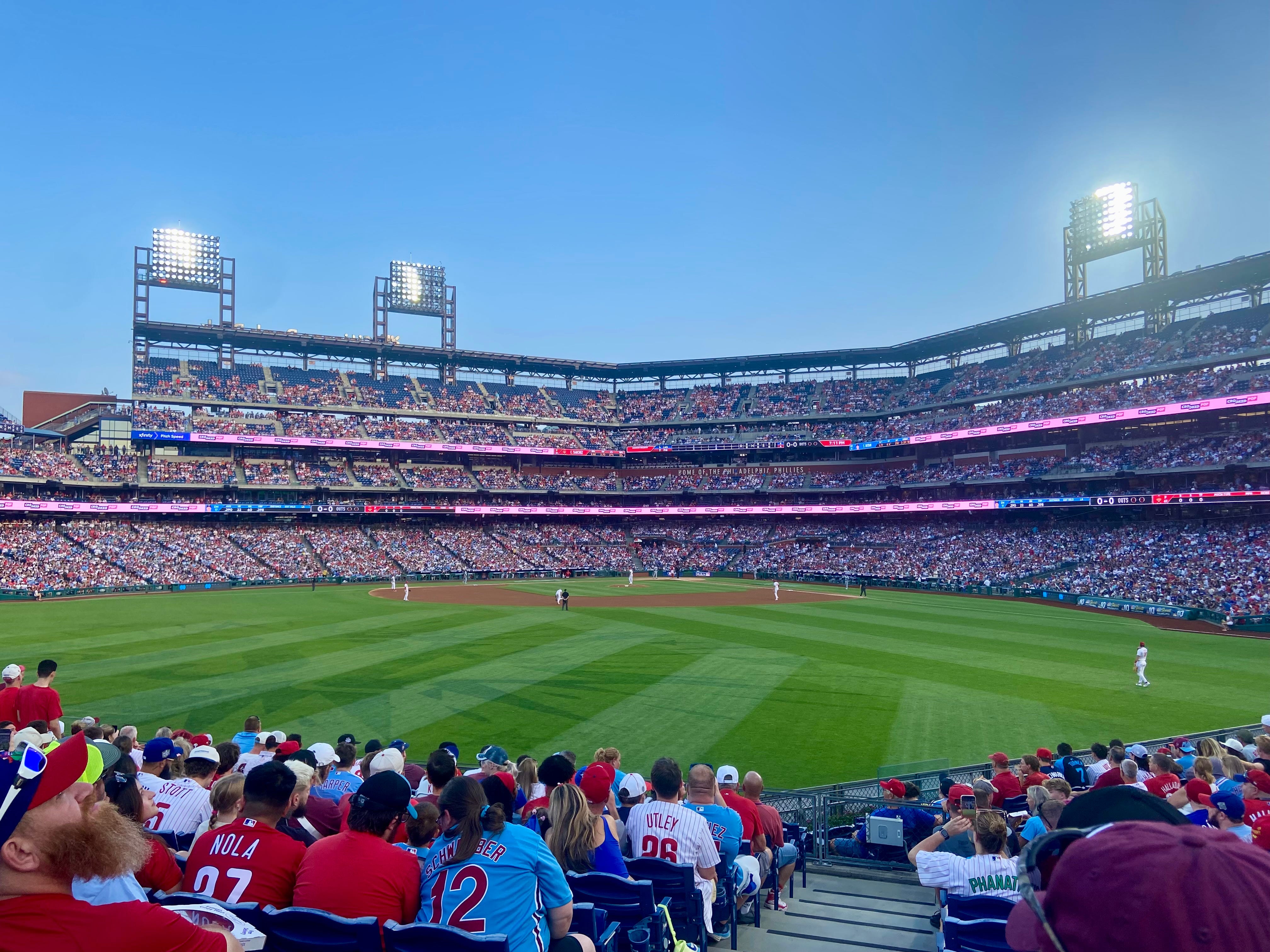
People who think football is America’s pastime are ignorant of baseball’s load-bearing columns behind the drywall: Nothing brings more people together more often than baseball, and it’s played everyday and at a relatively gentle pace, making it the game that most reflects (and is imbued with) everyday life.
I’ve stated and argued for these tenets many times, but living in Europe has given me new perspective on the uniqueness and centrality of baseball.
No other team sport in the world features as many games, and we Americans created the modern iteration of the game. We are the best at it (World Baseball Classic results notwithstanding). Perhaps Americans are more divided than ever, but 71.5 million people attended MLB games last year, to speak nothing of games in Little Leagues, high schools, etc. Baseball is a cultural force whose scale is mind-boggling.
I don’t point this out as a rosy-cheeked, pearl-clutching nostalgist—I’m looking at you, George Will—but rather as a Dumocrat who gets frustrated with my fellow liberals. Saying “Sports, go sports!” is not funny, and neither is calling for a home run during a football game. The lazy irony blinds us to the fact that a better America in a post-Trump era runs through the baseball diamond. The impending labor battle between the MLB players union and team owners will show us that yet again. Us non-MAGAs ignore baseball at our peril.
The US is a soccer country
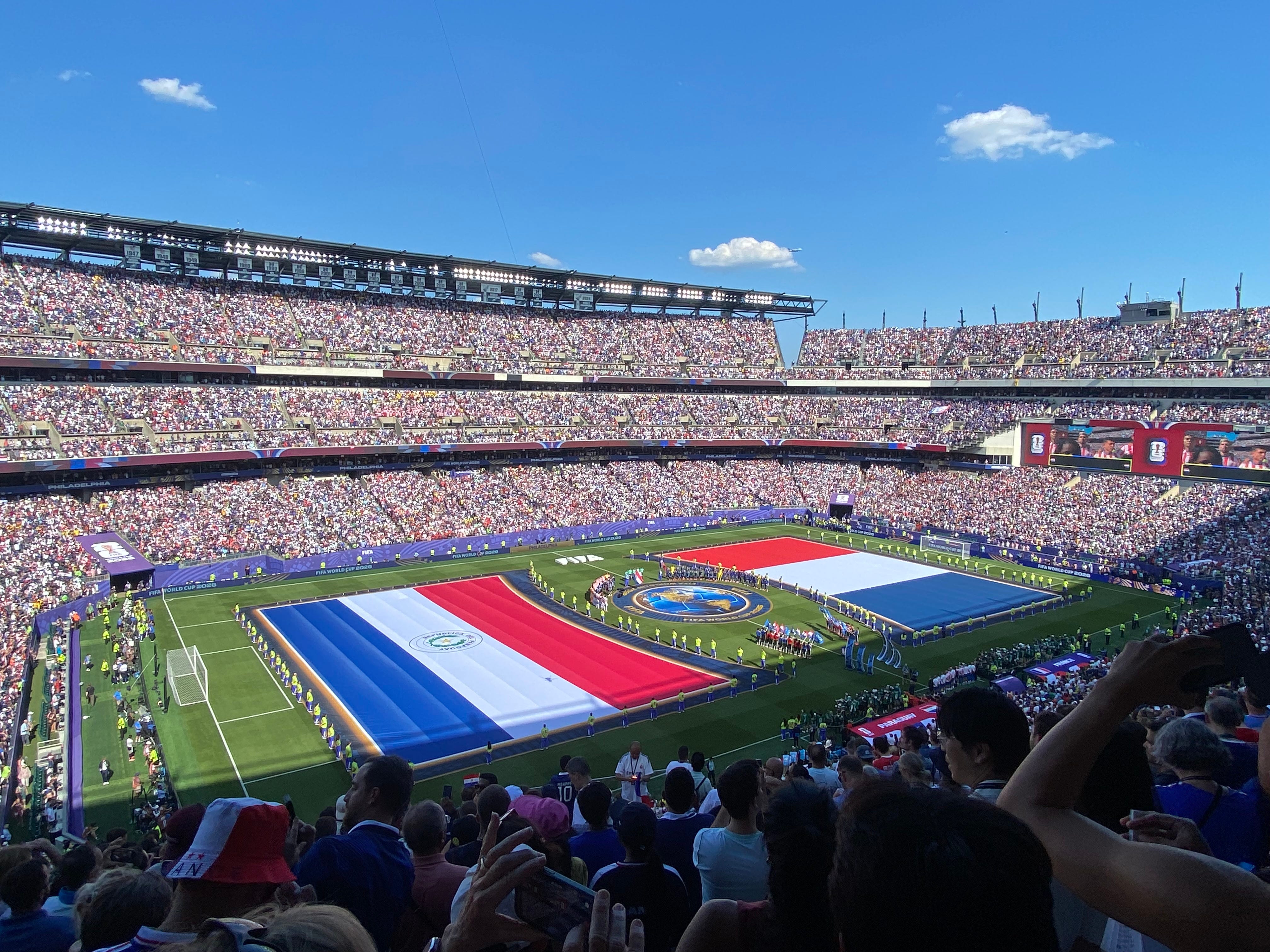
The tired arguments against soccer are not worth rebutting because football troglodytes and xenophobic losers are like fighters in a cave who have not heard the war is over. By any metric, the US is soccer country.
It’s one of the most popular youth sports. Tournament organizers—from youth levels to FIFA—can’t get enough of our consumer market. Neither can leagues like England’s Premier League or Germany’s Bundesliga. On the ground, the World Cup this summer was a blast, and it revealed how perfectly suited a nation of immigrants is for such an international competition. If baseball is our way of sitting around the kitchen table and maintaining familial bonds, then soccer is our way of lending our edger to the neighbor.
The problem is that organizing bodies choke the life out of the game by prioritizing money. MLS controls the professional game in the US, which allows it to impose severe payroll rules that drain the league of any sort of competitive juice but make their team owners a buck. US Soccer, the organizing body for all of soccer in the US, stands by as the pay-to-play system in the development pipeline is devoured by private equity. This further proves my points that the US is a soccer country, for nothing is more American than monopoly and exploitation.
Soccer is an electric sport. The US men’s national team flaming out of the World Cup was so upsetting because we’ve at long last plugged into that current.

Americans are superficially polite (complimentary)
Compatriots regularly ask me about French brusqueness, which is fitting considering the word ‘brusque’ comes from the French, and I regularly tell them the same thing. No, French people aren’t rude, and no, they don’t hate Americans. In fact, upon my rentrée I saw billboards celebrating the US’s recent 250th anniversary. (Thank you, France, for saving our asses in 1777 after the British took Philadelphia.)
The rude bit is harder to dispel, particularly because French people’s facial gestures are so expressive. The most intimidating reaction—and the reaction I imagine most American tourists have experienced and most fear—is the “Huh?” face. Furrow your brow, stick out your head from your neck, and quickly say “huh?” from the front of your mouth. It comes out when untrained Anglophones try to speak French or the American ways of communicating are lost on the French.
I suspect this stems from the idiosyncrasies of the French language, in which subtle sounds and pacing are essential to oral comprehension. The French simply cannot understand what we say. They mean no harm. The French highly value social order, and in a (perverse) way they are showing respect by not dancing around the problem and so quickly and clearly communicating that they do not understand.
Americans, on the other hand, are extremely, almost obscenely polite. We are patient, even gentle, when someone struggles with an accent. Small talk is an expected, if not required part of social interaction. We say “It’s okay” or “Don’t worry about it” even when we’re significantly inconvenienced or aggrieved.
American individualism is bullshit, an ideological con perpetrated by capitalists to sustain an economic order to their benefit. Workaday Americans know we’re in this together, which is why we go to baseball games so often, and why we have embraced soccer, and why we are warm, open, and friendly to each other.1
The expectation of progress is not dead
Three years ago, I said baseball is not dead and neither is America. For as anti-American as the MAGA-verse is, and as much institutional and sociological damage the Trump movement has caused and is continuing to cause, the US will not stop being a place of hope and opportunity as long as people are willing to fight for that vision. This is still true.
National examples abound, but I’d rather attest to this with two personal examples.
This summer, I worked at Family Promise of Philadelphia, a small nonprofit whose formal mission is to help families with children get and stay housed. What they actually do, in a city targeted by the Trump administration and especially impacted by its economic policy, is everything—they do anything and everything to help the moms and kids in their care have a better life. Angels do indeed bless America. Those angels are called social workers.
And early this summer, my former boss in San Diego City Councilmember Sean Elo-Rivera shepherded an effort to protect San Diego’s Office of Child and Youth Success from budget cuts. It was an office that I, as his policy director, had helped create in a previous budget cycle. I use the word ‘shepherd’ purposefully, for the real thrust of the effort was from young people in San Diego who refused to succumb to the false choices in contemporary public finance.
The youth organized, advocated, and ultimately succeeded. They are why I reject nonsense about “kids these days,” and they prove that America’s greatness and its capacity for improvement are not mutually exclusive.
Now, how do we get America to invest in trains?
I once recited this paragraph, in my best Obama impression, to a French person, and they responded, “But you don’t have affordable healthcare.” We shook hands and called it a draw.
I know this isn't a music publication, but I'll add a personal favourite to this too; hardcore punk. Absolutely fundamental in forming my political persuasion and outlook as a teenager. This is a heinously hackneyed thing to say, but I wouldn't be the person I am if I hadn't heard Minor Threat, Bad Brains, Fugazi etc at the age I did. And many will see this as sacrilegious, but it's vastly superior to British punk too (don't come for me fellow Brits, I'm allowed to say it).